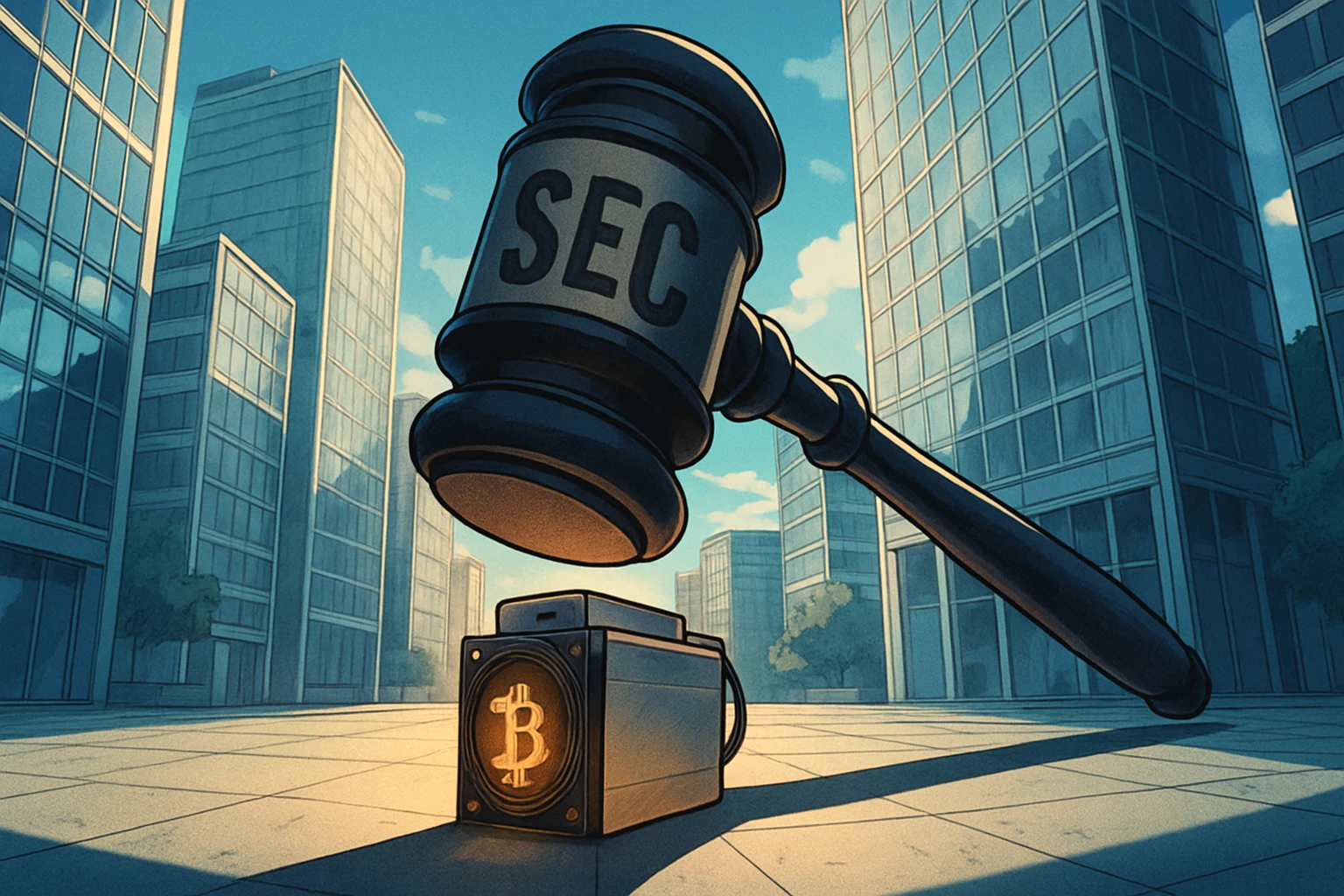
Paul Atkins, the new chairman of the SEC, declared that “the promotion of cryptocurrencies will be a priority in 2026”: the best is yet to come.
SEC Chairman Atkins announced the introduction of innovative immunity and new token classification next year, announcing that Washington’s supervision will shift from issuing penalties to retaining talents, and the return of market funds is expected to start
(Preliminary summary: The U.S. CFTC announced the release of BTC, ETH, and USDC as margins and collateral for derivatives contracts)
(Background supplement: U.S. SEC Chairman Paul Atkins: Tokenization and digital assets will fully enter the financial system "sooner than everyone expects")
Contents of this article
U.S. Securities and Exchange Commission (SEC) Chairman Paul Atkins dropped heavy news at the Washington Blockchain Association Policy Summit this morning: SEC will launch "Innovation Exemption" and a new "Token Taxonomy" in January 2026. For crypto industry players who have frequently received subpoenas in the past, this is like the first warm wave of the changing season.
"You haven't seen anything yet, the best is yet to come."
Atkins defined 2025 as the sowing period, and 2026 will be the harvest. These words are not only reassuring, but also mean that the SEC is changing its regulatory role from a mere enforcer to a designer paving the way for innovation.
Innovation Exemption: Three-year sandbox in exchange for capital return
The "Innovation Exemption" that has attracted the most attention from the outside world will provide new companies with a regulated sandbox for up to three years. As long as the project publicly discloses risks and accepts quarterly audits during the sandbox period, it can issue tokens and test business models, avoiding the burdensome public issuance application process. Atkins bluntly stated that the strategic value of the immunity is to "bring back the funds that were transferred to Dubai and Singapore back to the United States." For the DeFi and RWA fields, this is a highway that has a speed limit but is officially marked for the first time.
New taxonomy: Four barrels to dismantle the gray area
If immunity is the ticket, "Project Crypto"'s taxonomy is the rules of the game. According to reports, future tokens will be divided into four categories: digital goods or network tokens, digital collectibles (NFTs), digital tools or utility tokens, and tokenized securities. The first three categories are expressly excluded from traditional securities, while the last category is still subject to existing regulations. The real breakthrough lies in the inclusion of the concept of "decoupling": projects can be regarded as securities when raising funds in a centralized manner, but can change their status once the network is decentralized. This solves the dilemma that venture capital investors have been worried about for many years, "listing is illegal", which is equivalent to allowing the tadpole to grow out of the pond regulations.
Executive power first: not waiting for Congress’s Trump-style efficiency
Congress is still divided on encryption laws, but Atkins said in Atkins’ policy speech that the SEC will use existing rule-making powers to directly implement new plans. On the one hand, this move reduces the risk of legislative delays, and on the other hand, it also releases the regulatory certainty that Wall Street has been waiting for for a long time. In the future, the SEC will no longer be just a police officer issuing tickets, but a traffic engineer who actively builds roads and guides traffic flow.
Market Impact: Chip Reorganization and Risk Warning
With the provisions about to be announced at the end of January, institutional investors have begun to re-evaluate risk premiums. Projects under exemption may be able to obtain higher valuations, but they will also have to face a "secondary review" after the sandbox period expires. If the project fails to meet disclosure and decentralization milestones within three years, investors may face a downward revision of liquidity. In other words, the new regulations put the spotlight back on the United States, but the stage still has time limits and elimination rates.
From Gensler’s “shoot first, ask questions later” to Atkins’ “draw the track first, then start the race”, American regulatory philosophy is at a watershed. The implementation effect in 2026 will determine whether Wall Street can regain the Web3 indicator status, and will also affect whether global capital is willing to return to the embrace of U.S. dollar assets. For investors, the regulatory winter seems to be far behind, and what is really worth studying are the players who can survive and beat the speed limit in the new climate.